A child does not gain musical confidence from praise alone; confidence grows when they can hear a rhythm, reproduce it, keep a tala cycle and recover after an error. By the end, you will know which tabla skills create those experiences, how much home practice is realistic and what to look for when comparing children’s classes in Bengaluru.
Key takeaways
- Choose lessons with short, measurable practice goals.
- Ask teachers to demonstrate progress through theka, bols and sam.
- Use weekly recordings to help children hear improvement.
- Compare class size, feedback, performance practice and lesson format.
Why Tabla Practice Builds Confidence Through Real Achievement
Confidence grows when a child can hear a specific improvement and use it successfully, not when an adult offers general praise. A clean na, a steady short theka or a correct entry on sam gives the child evidence: “I can do this.”
Practice turns that evidence into skill through small, repeatable targets. The child says a bol, plays it, listens, and tries again until the stroke and timing become reliable. Then the teacher adds a short variation or call-and-response passage, giving accuracy a musical purpose instead of making repetition feel mechanical.
Useful achievement markers include:
- Repeating a bol pattern accurately three times
- Keeping a tala cycle without losing the count
- Playing a short theka at an even laya
- Completing a simple tihai and landing on sam
- Performing a prepared pattern without stopping
The sequence matters. Improvisation before stable finger placement and timing can strengthen uneven strokes, while delaying every creative choice can make practice dull. A balanced lesson moves from focused technique to a brief musical choice, then lets the child perform the result.
Parents observing tabala lessons for children in Bengaluru can look for this process in a trial class. Does the teacher notice hand tension, explain bols in an age-appropriate way, set one achievable goal and show how home practice will be checked? Those details reveal a method that builds confidence through mastery, not volume or applause.
What Children Learn Before They Play a Full Composition
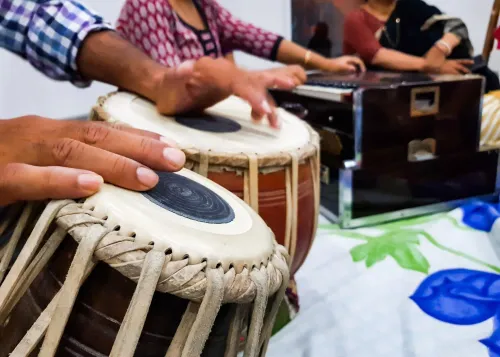
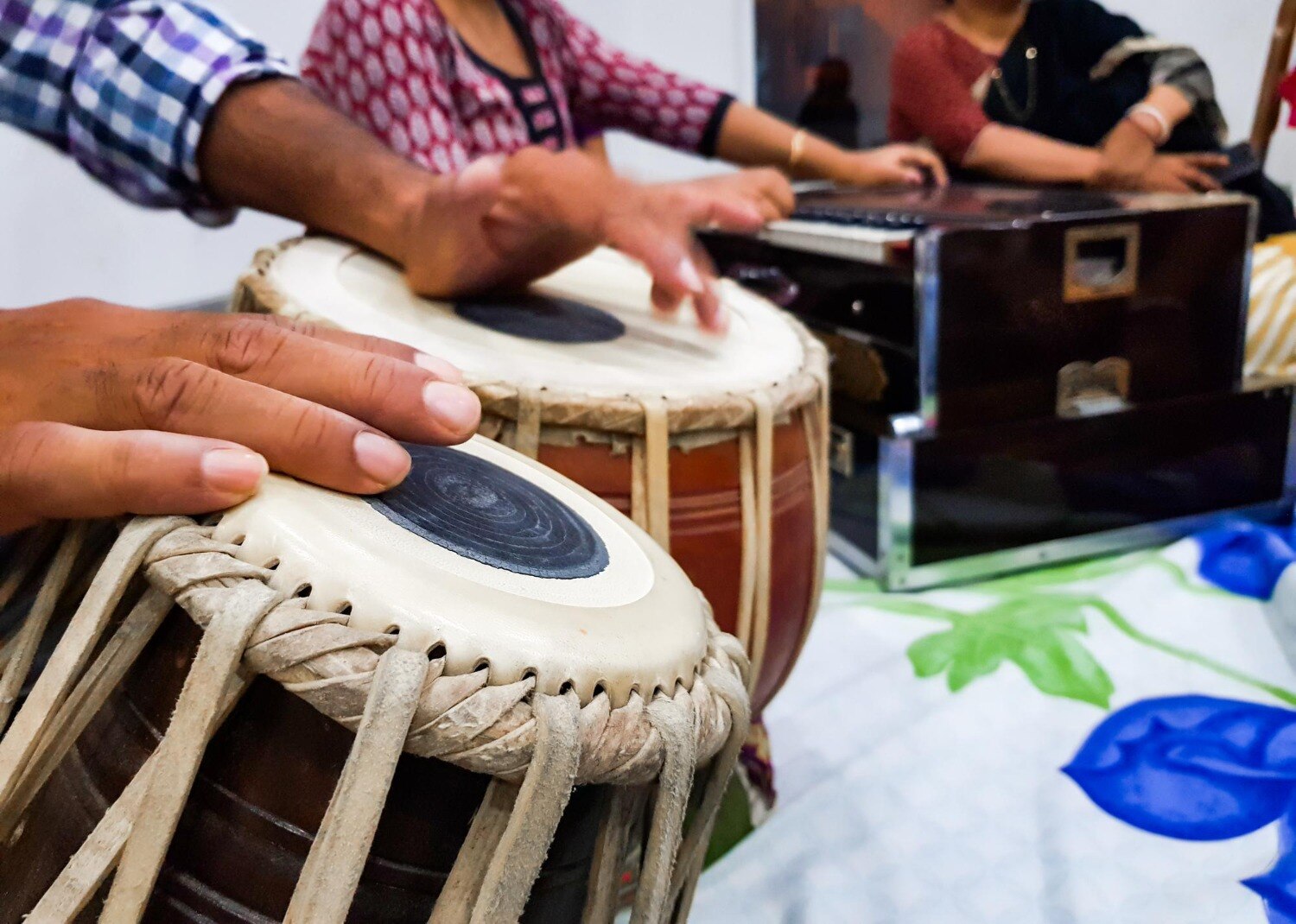
Before a child plays a full composition, they need a reliable toolkit: posture, hand position, basic bols, steady counting and controlled laya, or speed. Without these foundations, the dayan and bayan produce disconnected sounds rather than coordinated music.
- Sit with relaxed shoulders, stable wrists and drums at a comfortable height. Pain, raised elbows or excessive force will limit control.
- Learn bols such as na, tin, ta and dhin by hearing, saying and playing them. Speaking the syllables helps the child remember which hand and stroke come next.
- Practise the right hand on the dayan and the left hand on the bayan separately, then combine them in short patterns. A child preparing to learn tabala in bengaluru needs this hand independence before increasing speed.
- Count a tala cycle aloud and play its theka, the repeating rhythmic framework. A metronome or lehra exposes rushing and helps the child return to the first beat after a mistake.
| Foundation | Child practises | Control gained |
|---|---|---|
| Posture and touch | Balanced seating, relaxed fingers and lighter strokes | Clearer tone without strain |
| Bols and coordination | Says na, tin, ta or dhin while alternating dayan and bayan | Links sound, movement and memory |
| Tala and laya | Keeps a simple cycle at slow, medium and faster speeds | Maintains rhythm instead of chasing it |
| Theka and tihai | Repeats a short theka, then ends with a threefold phrase | Understands structure and finishes accurately |
Only after these steps should a teacher introduce longer compositions, variations and performance speed.
How Teachers and Parents Make Progress Easy to See
A progress card with one small target makes improvement visible without making practice feel like a test. In a trial lesson, the teacher might ask the child to speak the bols, repeat a short pattern, keep a four-beat cycle, and explain where sam falls.
The teacher should also watch posture, relaxed shoulders, finger movement and excessive force; pain or tension can make a simple exercise feel like failure.
For parents comparing kids tabala classes, look for activities that leave clear evidence of progress:
- Repeat one bol pattern accurately three times.
- Keep a short theka without stopping after a mistake.
- Record a beginning-of-month and end-of-month attempt.
- Choose between two exercises or a familiar piece for home practice.
- Play one brief pattern for a parent, teacher or small group.
At home, use a short routine that ends before hand fatigue or frustration. Start with gentle hand preparation, practise one focused bol or theka exercise, then finish with a familiar repetition the child enjoys. Adjust the length to the child’s age and attention; consistency matters more than a fixed minute count.
Ask, “Can you show me the cycle?” or “Where is sam?” rather than correcting every stroke. Praise a specific action, such as recovering after a missed bol, and avoid comparing speed with another child. A teacher can use demonstrations, recordings and optional mini-performances to show growth while keeping the child’s choice intact.
How to Compare Tabla Classes for Children in Bengaluru
A trial lesson should show how a teacher teaches, not just whether your child copies one rhythm. Ask whether the teacher groups children by age or playing level, teaches bols orally before notation, sets a small goal, and explains how home practice will be checked.
Compare Sri Veena Vani Music School with other providers using the same questions.
| Check | What to look for | Warning sign |
|---|---|---|
| Age grouping | Children learn with peers at a similar age or skill level, with tasks adjusted for attention span and coordination. | One pace for toddlers, older beginners and experienced players. |
| Lesson design | The teacher says, demonstrates and practises each bol, then builds short patterns instead of assigning long compositions immediately. | The child only copies written rhythms or memorises pieces. |
| Correction | The teacher watches hand position, listens to tone and gives one clear correction at a time. | Praise replaces feedback, or the teacher corrects several faults without showing the movement. |
| Instrument setup | The dayan and bayan sit securely at a usable height; shoulders stay relaxed and hands move without pain. | The child reaches, collapses fingers or strikes with excessive force. |
| Delivery | In-person lessons make hand observation easier. Online tabala lessons for children in Bengaluru need a close hand camera, solo playing for feedback and recorded clips because call delay disrupts ensemble playing. | The class depends on everyone playing together through a video call. |
Choose tabala classes in Bengaluru for children only after checking whether the teacher can explain progress in terms your child understands. A steady cycle and a clean recovery after a mistake matter more than a crowded syllabus.
Related product
Tabala Classes ₹3000 Sri Veena Vani Music School in Bengaluru, India, offers professional and structured tabala classes for learners of all ages. View product → |
What Musical Confidence Looks Like in a Young Tabla Player
The aim when children learn tabala in bengaluru is not louder playing; it is reliable control. A child with usable tabla confidence can keep a short tala cycle, repeat bols accurately, enter on sam and continue after a mistake. Praise alone does not produce those behaviours.
- Keeps a steady theka while counting, instead of speeding up whenever the pattern feels difficult.
- Names or explains the tala being played, showing that the child understands the cycle rather than copying sound mechanically.
- Attempts a short variation or tihai, then listens and adjusts without abandoning the exercise.
- Produces a clear dayan and bayan sound with relaxed hands, rather than striking harder to appear confident.
- Plays a complete short pattern for a parent or teacher without stopping after one imperfect stroke.
| Behaviour | Usable musical confidence | Praise-based appearance |
|---|---|---|
| Recovery | Restarts from the correct beat after a mistake | Stops, laughs it off or waits for rescue |
| Volume | Changes force to produce distinct tones | Plays loudly regardless of tone or rhythm |
| Rhythm | Maintains laya through several cycles | Copies one phrase but loses the tala immediately |
| Understanding | Explains the bols, tala or entry point | Repeats praise words without knowing what was played |
| Performance | Finishes a short exercise and evaluates it | Volunteers quickly but cannot complete the pattern |
Families comparing kids tabala classes can ask for one recorded exercise and watch whether progress appears in timing, tone and recovery—not just in the number of compositions a child can announce.
Frequently asked questions
Why does tabla practice build confidence in children?
Tabla practice creates visible achievements, such as playing a clean na, maintaining a steady theka or entering correctly on sam. These results give children evidence of progress instead of relying on general praise.
What do children learn before playing a full tabla composition?
They first develop posture, hand placement, basic bols, counting, steady tempo and theka control. Teachers then combine these skills into short patterns and compositions.
How can parents and teachers make a child’s tabla progress easy to see?
Set small weekly goals, record practice excerpts and compare timing, clarity and accuracy over time. Teachers can also use demonstrations, repetition and short performances.
How should parents compare tabla classes for children in Bengaluru?
Compare teacher feedback, class size, practice guidance, performance opportunities, travel or online convenience and whether lessons suit the child’s age and pace.
Keywords