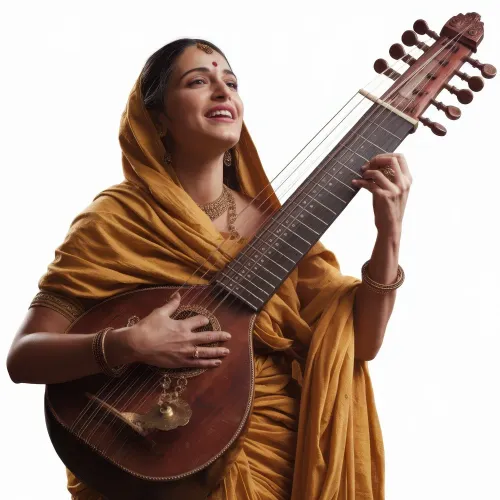
The veena has a distinctive place in Indian classical music. Its rich tonal quality, expressive gamakas, and close association with Carnatic tradition make it appealing to students who want to explore instrumental classical music. However, beginners often wonder whether Veena classes require previous musical knowledge or whether they can start from the basics.
For most learners, prior instrumental experience is not essential. What matters more is patient instruction, regular practice, correct technique, and a willingness to build skills gradually.
Understanding the First Stage of Veena Learning
Initial lessons are usually focused on becoming comfortable with the instrument.
Students may first learn:
- Correct sitting posture
- How to position and support the veena
- Basic right-hand plucking technique
- Left-hand movement
- Identification of swaras
- Simple fingering exercises
- Tala awareness
- Elementary melodic exercises
These fundamentals may appear simple, but they influence almost every advanced technique learned later.
Why Posture and Technique Matter
A beginner may naturally concentrate on producing recognizable melodies. However, incorrect hand positioning can make playing unnecessarily difficult.
Good instruction helps students understand how much pressure to apply, how to coordinate both hands, and how to move comfortably across the frets.
Learning these habits early can make longer practice sessions more manageable as the student's repertoire expands.
Is Carnatic Music Knowledge Necessary?
Knowledge of Carnatic music can certainly help, but beginners do not necessarily need to arrive with formal training.
Basic concepts such as swaras, tala, and melodic patterns can be introduced alongside instrumental lessons. Students who already understand Carnatic vocal music may find certain concepts familiar, while complete beginners can build both musical and instrumental knowledge together.
Sri Veena Vani Music School provides instruction for learners interested in developing their understanding of traditional instruments and Indian classical music.
Choosing a Suitable Practice Schedule
Students attending classes from areas such as Banashankari 2nd Stage, Padmanabhanagar, Kathriguppe, Girinagar, Srinagar, Chikkalasandra and surrounding South Bengaluru neighbourhoods should plan a realistic home practice schedule.
Consistency matters more than attempting lengthy sessions irregularly.
A beginner might practise individual exercises slowly before combining them. Accuracy should come before speed. When an exercise becomes comfortable, tempo can gradually increase under the teacher's guidance.
Give the Instrument Time
The veena requires coordination, listening, patience, and physical familiarity. Clear notes and smooth movement usually develop through repetition rather than immediately.
Students should therefore judge progress over months rather than individual lessons.
With systematic practice, beginners gradually move from basic swara exercises to geethams, varnams, compositions, and more expressive playing. A strong foundation makes this journey both more productive and enjoyable.
Keywords