A first Carnatic lesson usually begins with posture, breath, shruti alignment and simple swara exercises, not a complete kriti. By comparing the learning sequence, class routine, practice expectations and online or in-person differences, you can identify what a Bengaluru course actually provides before enrolling.
Key takeaways
- Expect posture, breathing, śruti alignment, akaram and pitch matching first.
- Learn tala through clapping, counting and progressively longer exercises.
- Compare teacher feedback, syllabus, practice guidance and lesson format before enrolling.
- Choose online tuition for flexibility; choose in-person lessons for direct physical and acoustic guidance.
What happens in the first Carnatic music lessons?
A first lesson should establish posture, relaxed breathing, open-throated singing and alignment with a chosen śruti, using a tambura or electronic śruti box. The teacher introduces akaram, sustained vowels and pitch matching before expecting a beginner to sing a full composition.
Ask what is included in Carnatic music lessons; the carnatic music class details should name the exercise sequence, teaching language and notation provided.
- Sarali varisai develops steady ascending and descending swara movement.
- Jantai varisai trains repeated notes and firmer vocal control.
- Dhātu varisai introduces skips between notes instead of stepwise movement.
- Alankāram combines swaras with changing patterns and tāla cycles.
- Simple tāla practice uses hand-counting for Ādi tāla, Rūpaka tāla or the cycle assigned by the teacher.
| Stage | What you practise | What you should understand |
|---|---|---|
| First classes | Śruti, akaram, sarali varisai | Śruti is the pitch reference; swara is a musical note |
| Early exercises | Jantai, dhātu and alankāram | Keep pitch accurate while maintaining the beat |
| Rāga introduction | Short phrases with characteristic gamaka | Rāga identity depends on phrase shape, oscillation and slides, not keyboard-like notes alone |
| After foundations | Simple geetham, followed later by varnams and kritis | Ārohaṇa means ascent, avarōhaṇa means descent, and tāla organises time |
Theory belongs beside singing: a teacher should explain rāga, gamaka and tāla while you perform them, not leave them as definitions to memorise.
How do tala, raga and compositions enter the course?
Students usually move from basic exercises to compositions only after they can hold sruti and repeat patterns without losing pitch. Tala enters during alankaram: the learner keeps a steady Adi tala cycle and fits each swara pattern accurately to its beats.
- Sarali varisai builds note control and rhythmic steadiness.
- Jantai varisai adds repeated notes and stronger articulation.
- Dhātu varisai introduces skipping patterns and pitch movement.
- Alankaram combines swara patterns with different talas and speeds.
- Geethams provide the first complete, raga-based pieces, with simple lyrics and melodic phrases.
- Swarajatis and simple kritis follow as the student gains control of sahitya, sangatis and longer phrases.
- Varnams come after that in many courses; they develop speed, range, sustained notes and deeper familiarity with a raga.
Ask what is included in Carnatic music lessons, because the sequence and repertoire vary. A course may emphasise devotional songs, kritis in Kannada, Telugu, Sanskrit, Tamil or Malayalam, or a particular composer tradition.
Introductory manodharma usually begins after students understand raga phrases through compositions. Short alapana phrases, simple neraval and guided kalpana swara exercises come before independent improvisation. Track progress by stable pitch, accurate tala and singing without prompts, not by song count.
What does a typical class and home practice routine contain?
A useful lesson begins with the student singing previously assigned material while the teacher checks pitch, rhythm, pronunciation and troublesome phrases. The teacher then introduces new work, demonstrates it in small sections, and explains the practical meaning of śruti, swara, raga, tala and gamaka rather than treating theory as a separate subject.
Between classes, complete a short, repeatable routine:
- Set the same personal tonic on a tambura or electronic śruti box; do not copy a fixed pitch such as C or D if it strains your range.
- Sing assigned exercises slowly, then at the specified speed, keeping the adi tala cycle steady.
- Rehearse the current composition in sections, with attention to lyrics, notation and sangatis.
- Isolate the exact phrase, note transition or speed that the teacher corrected and record one clean attempt.
A teacher should review this work at the next class, not replace it with a new song every time. As control improves, lessons connect compositions to raga-based exploration and later introduce improvisational work such as alapana, neraval and kalpana swara.
The useful carnatic music class details also include whether your fee covers notation, recordings or practice tracks, theory support, assessments and make-up lessons.
How do vocal and instrumental Carnatic lessons differ?
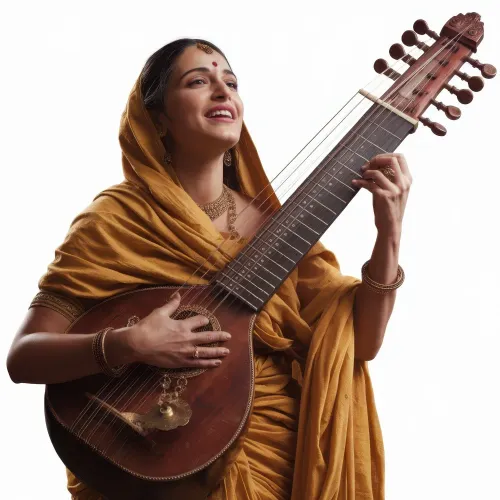
The core syllabus stays familiar, but the physical work changes sharply. Vocal students build breath control, akaram, pitch stability and clear pronunciation. Veena students develop plucking technique, left-hand gamakas and coordination between both hands. Violin students add bow control, fingering, posture and continuous pitch movement.
| Training area | Vocal lessons | Veena lessons | Violin lessons |
|---|---|---|---|
| Sound production | Breath, voice placement, akaram and śruti alignment | Plucking, string balance and resonance | Bow pressure, speed, contact point and tone |
| Pitch work | Sing swaras and rāga phrases accurately | Locate swaras on frets and shape gamakas with the left hand | Find swaras without frets and slide between them |
| Tala practice | Sing while keeping ādi or rūpaka tāla by hand | Coordinate plucking patterns with the tāla cycle | Coordinate bow changes, fingering and tāla |
| Technique practice | Varisais, breath exercises and vocal range | Sarali patterns, plucking combinations and fingering | Bowing patterns, string crossings and fingering |
| Practical needs | Suitable pitch and regular voice practice | Tuned instrument, posture and string maintenance | Correct bridge, bow, strings and instrument setup |
What is included in Carnatic music lessons should therefore specify instrument technique, not just “songs and theory.” Ask whether the fee includes notation, practice tracks, repertoire, theory, assessments, accompanist support and performance opportunities; these extras differ between Bengaluru schools.
Instrument students also need regular tuning and slower phrase practice because a correct swara without the right gamaka still distorts the rāga.
Should you choose online or in-person Carnatic tuition in Bengaluru?
Sound, correction and convenience are the real trade-offs. In-person teaching gives the teacher a shared acoustic space for immediate corrections to posture, breath, mouth position, hand tāla and group synchronisation. Online lessons work only when your microphone captures your voice clearly and internet delay stays low.
| Option | Sound and correction | Equipment and conditions | Better choice |
|---|---|---|---|
| In-person | Teacher hears pitch, pronunciation, gamaka and tāla directly; group singing exposes timing gaps | Quiet room, notebook and śruti box; travel and fixed timings apply | Choose it if you need physical correction, ensemble practice or close supervision |
| Online | Headphones and delay can hide pitch or timing errors; correction usually happens one student at a time | Stable internet, camera, external microphone and a quiet room; keep the teacher’s audio separate from your own | Choose it for flexible scheduling, home access or one-to-one lessons when your setup is reliable |
Online group classes are not automatically equivalent to private tuition. Several voices competing through a call can prevent a teacher from diagnosing a small pitch error, while in-person groups give useful practice in following others.
Ask what the fee includes: trial class, notation, practice tracks, theory, periodic assessment, make-up lessons and performance opportunities. The question “what do carnatic music classes for include in bengaluru” is best answered by this checklist, not by the course label.
Sri Veena Vani Music School is one Bengaluru option to compare against these specific conditions rather than choosing on format alone.
Related product
Carnatic Music Classes ₹3000 Sri Veena Vani Music School in Bengaluru, India, offers professional and structured Carnatic music classes for learners of all ages. View product → |
How can you compare what Bengaluru classes include?
Compare carnatic classes in bengaluru on three things: included resources, measurable progress, and enrolment terms. A low fee can hide missing practice tracks, assessments, or make-up lessons.
Before paying, ask:
- Is a trial class included, and is the syllabus suitable for your level?
- Do fees include repertoire, notation, recordings, or practice tracks?
- Does the course cover theory alongside exercises and compositions?
- How often are assessments held, and what skills do they measure?
- Are accompanists or student performance opportunities provided?
- What happens when you miss a scheduled lesson?
- Does online tuition use individual correction rather than delayed group singing?
| Area | Evidence to look for | Question to ask |
|---|---|---|
| Syllabus | Exercises progress into geethams, varnams, kritis, and later manodharma | What is the next milestone after my current material? |
| Progress | Stable pitch, accurate tāla, clear pronunciation, raga phrases, and unprompted singing | How will you record improvement? |
| Support | Practice feedback, recordings, assessments, and defined make-up terms | Which items are included in the fee? |
Frequently asked questions
What happens in the first Carnatic music lessons?
A first lesson covers posture, relaxed breathing, open-throated singing, śruti alignment, akaram, sustained vowels and pitch matching before a full composition.
How do tala, raga and compositions enter a Carnatic course?
Students build tala through counting and hand gestures, develop raga awareness through swara patterns, and approach compositions after foundational pitch and rhythm work.
What does a typical Carnatic music class and home practice routine contain?
A class combines warm-ups, svara exercises, tala work, lesson revision and teacher feedback. Home practice reinforces these exercises through short, regular sessions.
Should you choose online or in-person Carnatic tuition in Bengaluru?
Online lessons offer scheduling flexibility and remove travel, while in-person tuition provides immediate acoustic feedback and closer observation of posture and technique.
Keywords